
As pet care professionals, we’re always looking for ways to make our pets’ environments safer. One often-overlooked safety risk is leaving a collar on a dog while they are inside a crate.
While it may seem harmless, collars and crates can be a dangerous combination. In fact, many veterinary professionals, trainers, breeders, rescue organizations, and pet care providers recommend removing collars before a dog is crated.
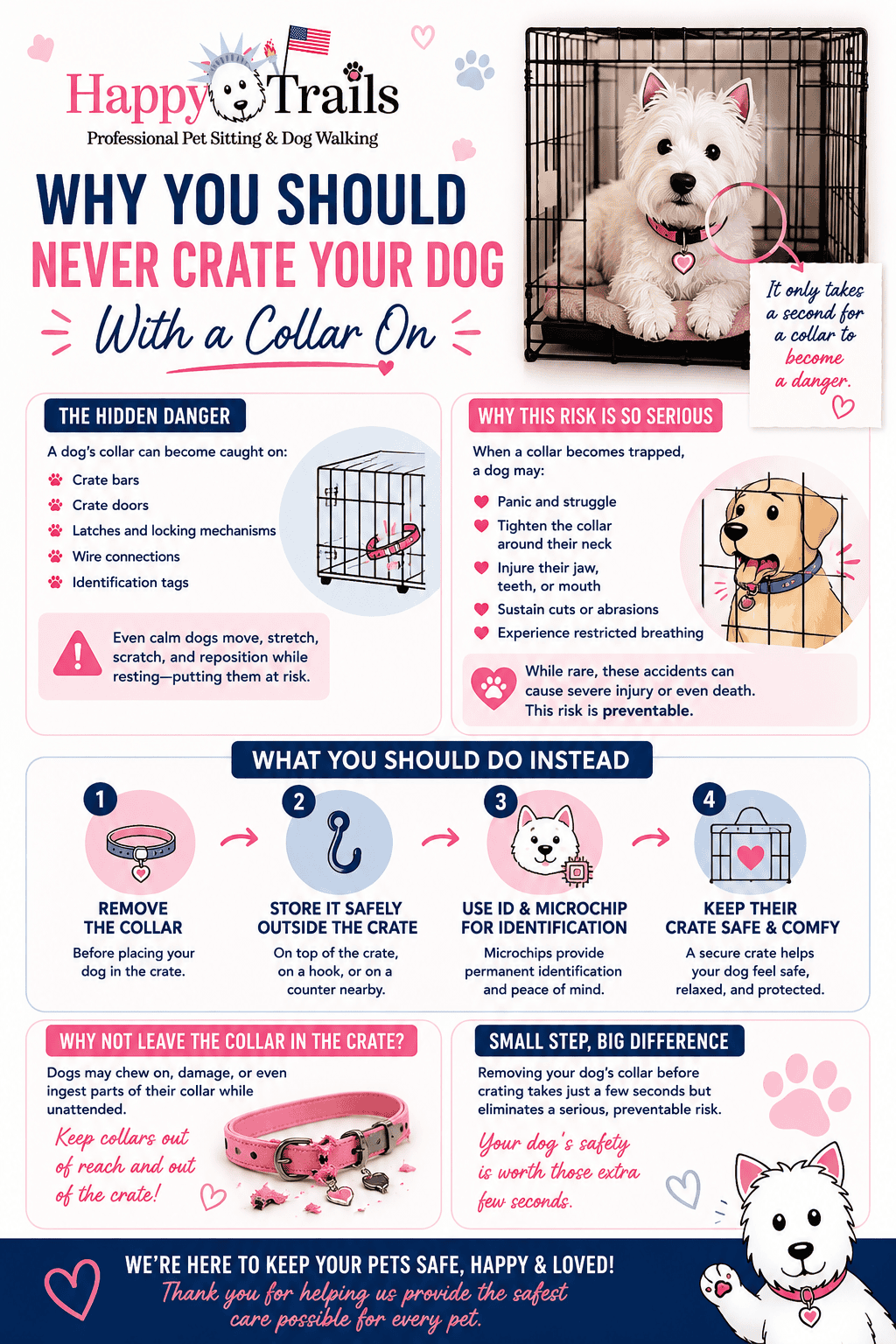
The Hidden Danger of Crate Collars
A dog’s collar can become caught on:
- Crate bars
- Crate doors
- Latches and locking mechanisms
- Wire connections
- Identification tags attached to the collar
If a collar becomes snagged while a dog is shifting positions, standing up, lying down, or attempting to move around inside the crate, it can quickly become a life-threatening situation.
Dogs naturally move around, scratch, stretch, and reposition themselves while resting. Even a calm dog can accidentally catch a collar on part of the crate.
Why This Risk Is So Serious
When a collar becomes trapped, a dog may:
- Panic and struggle
- Tighten the collar around their neck
- Injure their jaw, teeth, or mouth
- Sustain cuts or abrasions
- Experience restricted breathing
Unfortunately, some accidents involving collars and crates have resulted in severe injury or even death.
While these incidents are rare, they are entirely preventable.
“But My Dog Has Always Worn Their Collar in the Crate”
Many pet owners have never experienced an issue—and that’s wonderful.
The challenge is that safety procedures are not based on what usually happens. They are based on preventing the rare situations that can have serious consequences.
Seat belts are a good example. Most drives don’t end in an accident, but we wear seat belts anyway because the risk, while uncommon, is significant.
The same principle applies to collars and crates.
What Should You Do Instead?
Before crating your dog:
- Remove their collar.
- Ensure identification information is available elsewhere if needed.
- Place the collar somewhere safe and out of reach.
Good locations include:
- On top of the crate
- Hanging on a nearby hook
- On a counter or shelf near the crate
- In a designated pet-care area
Avoid placing the collar inside the crate with the dog.
Some dogs may chew on the collar, damage it, or ingest pieces of it while unattended.
What About Identification?
Many pet owners worry about removing a collar because of identification concerns.
If your dog is inside a secured home and safely contained in their crate, the risk of temporary collar removal is generally much lower than the risk of collar entanglement.
Microchipping your pet is also one of the best forms of permanent identification and provides an added layer of protection should your pet ever become lost.
Safety Is About Layers
Pet safety is often about small decisions that work together to reduce risk.
Removing a collar before crating takes only a few seconds, but it eliminates one preventable hazard from your dog’s environment.
As pet owners, we all want the same thing: for our pets to be safe, comfortable, and well cared for when we’re home and when we’re away.
Sometimes the smallest changes make the biggest difference.
The Bottom Line
When using a crate:
✔ Remove your dog’s collar before crating.
✔ Store the collar safely outside the crate.
✔ Ensure the crate is secure and comfortable.
✔ Continue using identification methods such as microchips and ID tags when your dog is not crated.
Your dog’s safety is worth those extra few seconds every time.
Recent Comments